
Nearly a million
young people are
already looking.
It’s time we stopped pretending they aren’t.
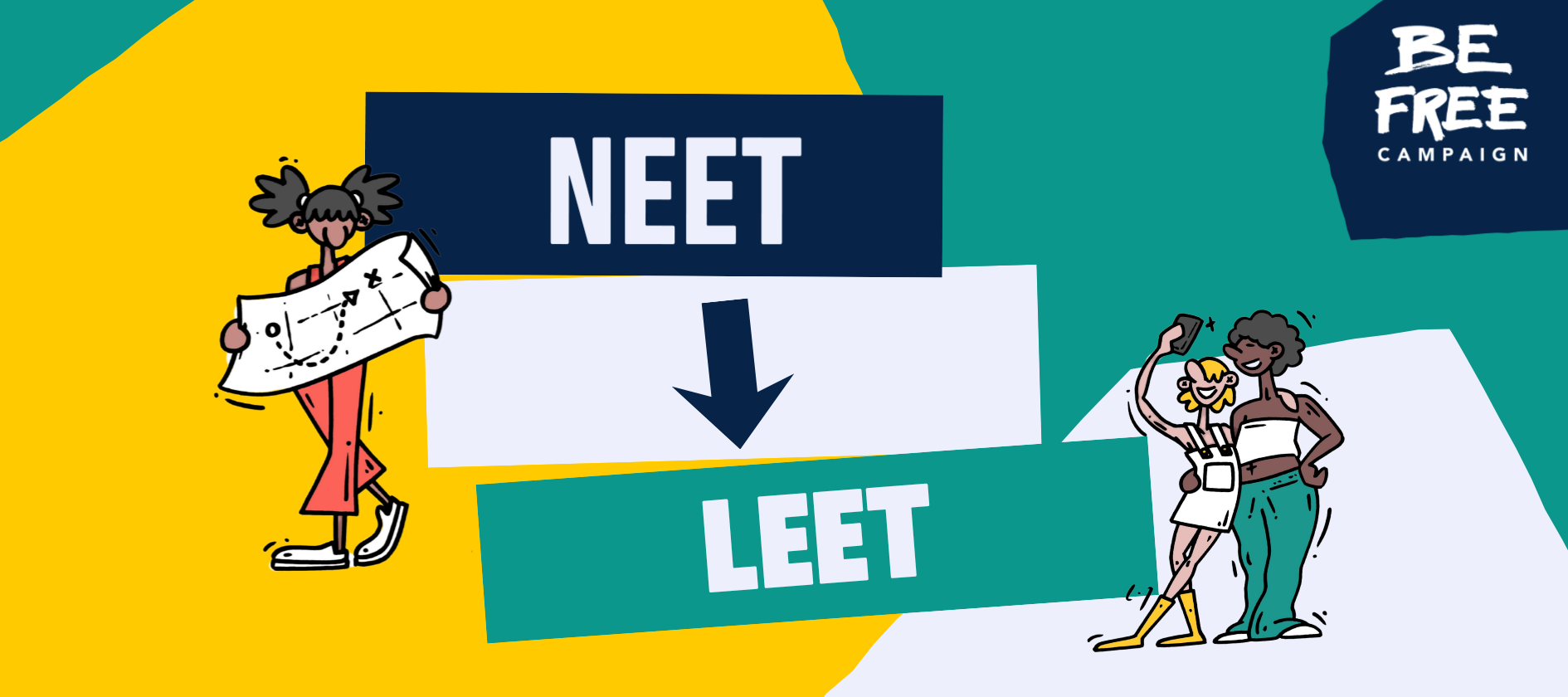
From NEET (Not in Education, Employment or Training) to LEET (Looking for Education, Employment or Training). A national campaign to change the language, and the future, of UK youth opportunity.
The Problem
We defined a generation by what they are not.
“NEET” sounds technical. Neutral. Sensible. It isn’t. It’s a deficit label that reduces young people to absence, then builds policy around that absence.
Behind the acronym are nearly a million individual stories: carers, students between things, young people recovering, young people building. Not absent. Looking.
young people aged 16 to 24 currently classified as NEET in the UK.
DfE / ONS, 2024
are economically inactive for complex reasons: caring, recovering, or navigating real barriers.
ONS Youth Labour Market
of 18 to 24 year olds believe their background determines where they end up in life.
Princes Trust Youth Index
youth unemployment rate, around five times the rest of the working population.
ONS Labour Market Stats
Why language matters
Words shape identity.
Identity shapes outcomes.
Deficit-based language quietly erodes confidence and credibility at the very moment adulthood begins. Researchers call it an identity capital deficit.
Asset-based language does the opposite , it conveys dignity, builds motivation, and improves academic and social-emotional outcomes.
The Solution
Not NEET. LEET.
Looking for Education, Employment or Training.
One letter changes everything. LEET reframes a young person from a problem to be fixed, into someone actively building their next step. It puts the responsibility back on systems to meet them.
Passive. Deficit.
- Defines young people by absence
- Frames them as a problem to fix
- Shifts blame to the individual
- Builds services around shortfall
Active. Potential.
- Recognises effort and agency
- Frames them as ready to act
- Holds systems accountable
- Builds services around capability
The Movement · #FromNEETtoLEET
A movement, not a memo.
Three shifts. One direction. Together we’re changing what the UK calls its young people, and what it offers them.
Policy change
Push government, councils and public bodies to adopt LEET in official reporting and policy language.
Language adoption
Move charities, media and educators away from deficit framing toward asset-based language.
Sector-wide shift
Realign services around capability , recognising young people as active agents, not categories.
Partner logos coming soon
Are you a charity, council, employer or educator? Partner with us →
The Open Letter
We have succeeded.
Succeeded in defining
a million young people
by what they are not.
Not in education. Not in employment. Not in training.
A word will not solve inequality. But it can stop reinforcing it. Nearly a million young people are already looking. It’s time we stopped pretending they aren’t.
Add your name
Sign the open letter

NEET to LEET will help us move away from being problem-based, to seeing what young people are , full of potential.
Dr Shantanu Kundu
Founder & CEO, Be Free Campaign
Nearly a million young people
are already looking.
Add your name. Bring your organisation. Share the words that change the future.